Forge
Estimated reading time: 10 minutes
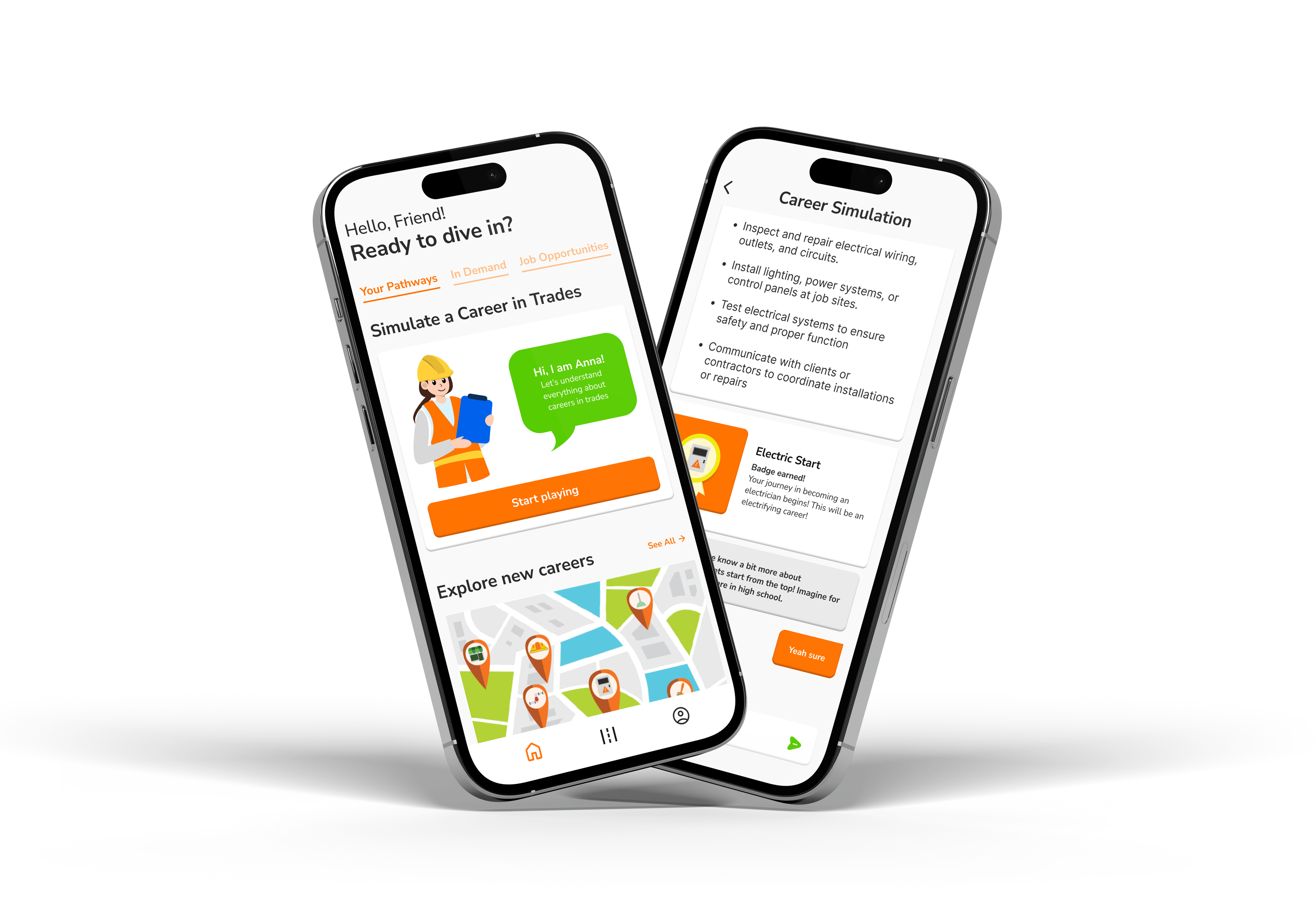
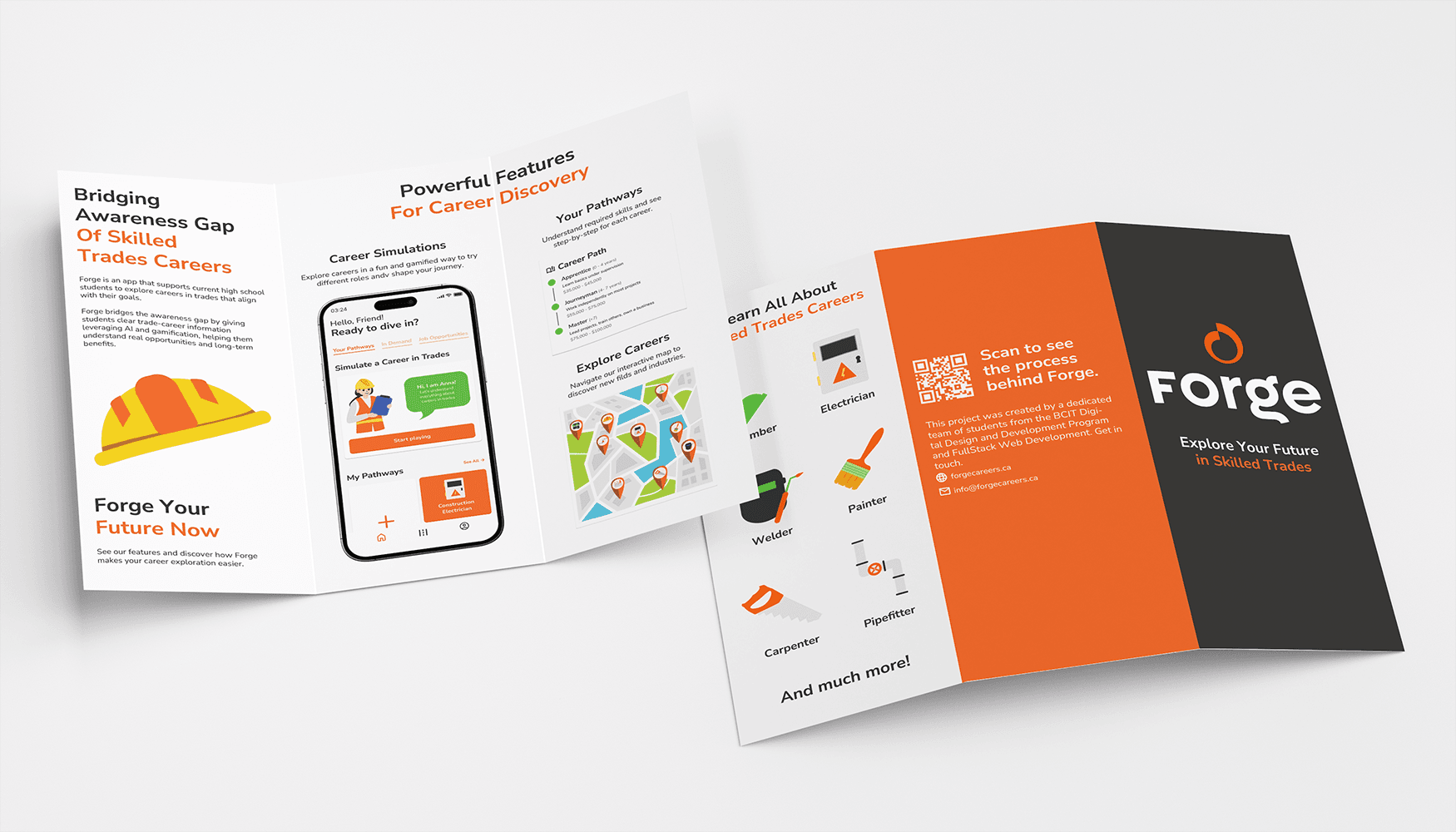
Gamifying skilled-trades discovery and helping high school students and young adults explore, experience, and choose their future with confidence.

4 million people in Canada work in the skilled trades, and that a large number will need to upskill while many will retire by 2028.
Source
Approximately 700,000 skilled trades workers are expected to retire in Canada by 2028.
Source
The average age of an apprentice today is around 27, a whole lot of them go to university first, don't get the jobs they want, and come back to the trades.
Source
Insights & Expectations
To sum it up, there will be a shortage of labour for BC's skilled trades industry. Also, the average apprentice is not as young as expected.
We thought the problem was that it's hard to enter the business as a business owner. So in the beginning, we thought the opportunity was to help out immigrant business owners.
Based on the assumption that they cannot create a successful business due to the language barrier and difficult to understand documents.
Initial Ideation
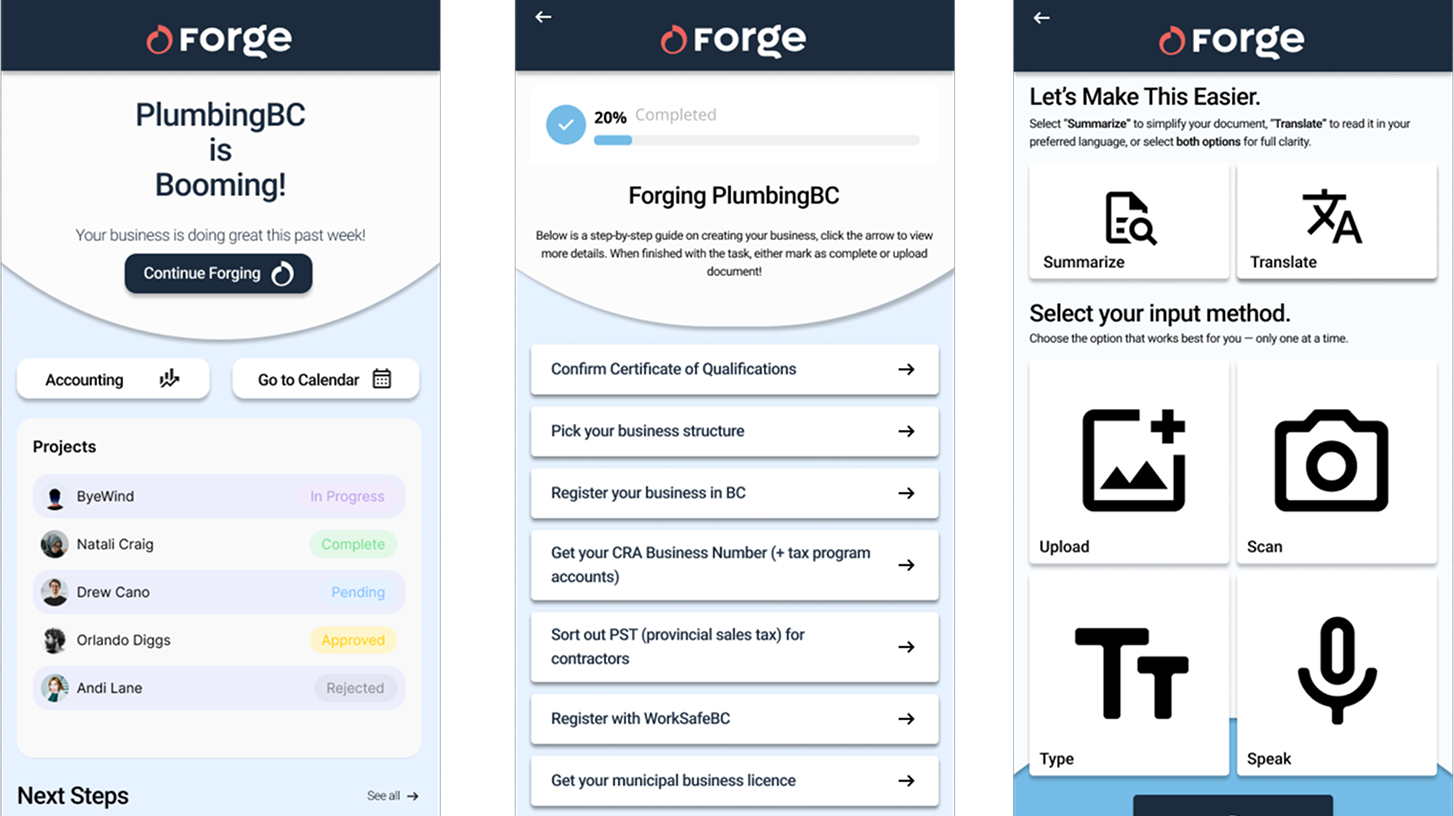
I quickly made these mockups, a business dashboard doubling as a step by step guide to building a business. We were excited, convinced this is the idea going forward.
Redefining Scope
The initial idea is not going to work due to too much research and logistics and it being a big undertaking.
We shifted from helping immigrant business owners back to brainstorming. We identified a gap in studying apprentices due to challenges like school/work, financial pressure, and information overload.
The new focus: raising awareness for high school students.
Assumption
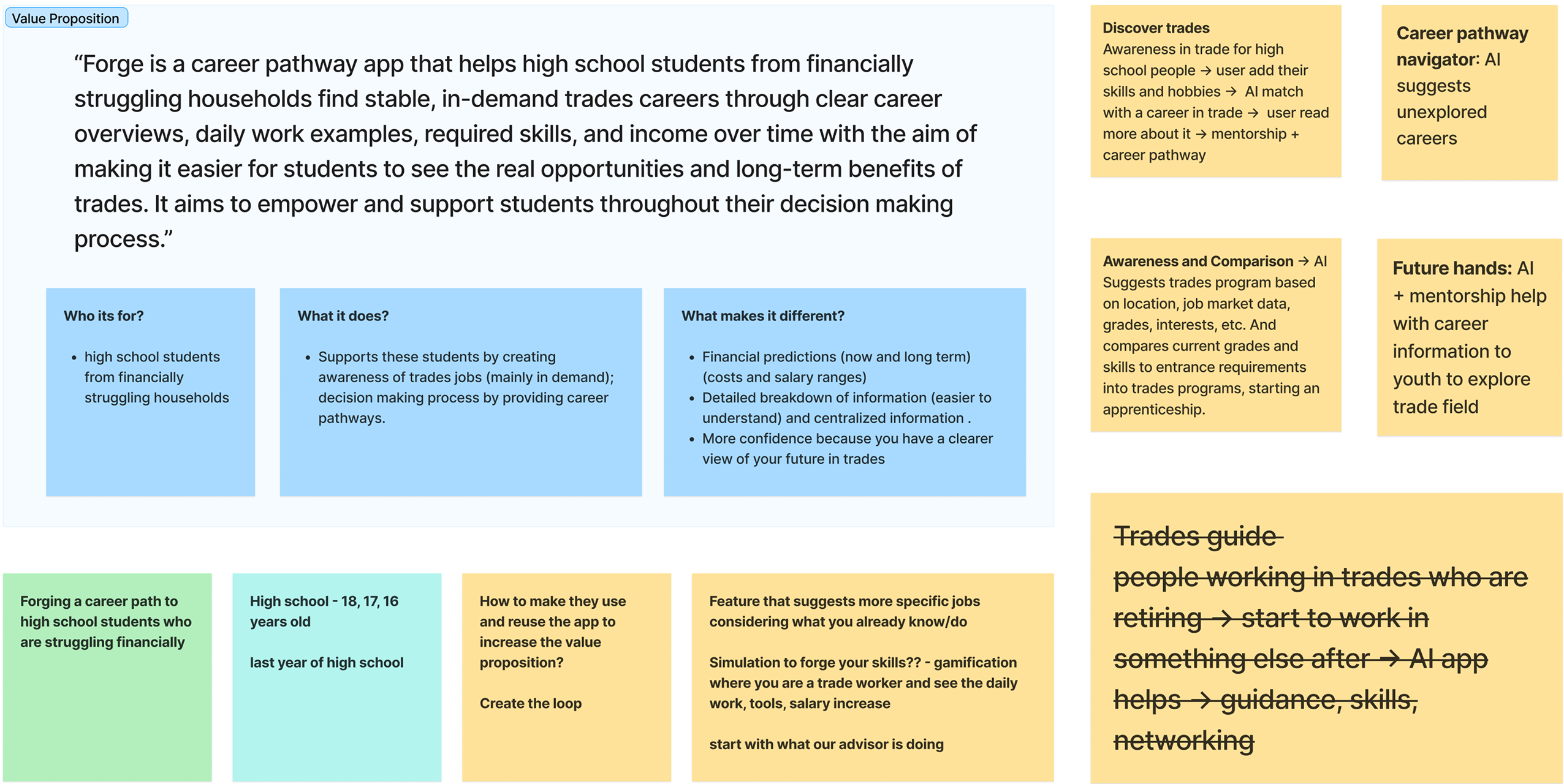
So why high school students? Well it's apparent that there are a lot of opportunities in the coming years in skilled trades.
With the older workers retiring and a relatively high average age for apprentice, there is potential for high school students to come in and fill the upcoming labour shortage.
Primary Research
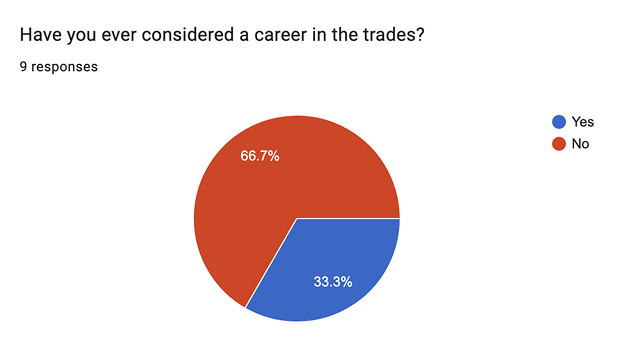
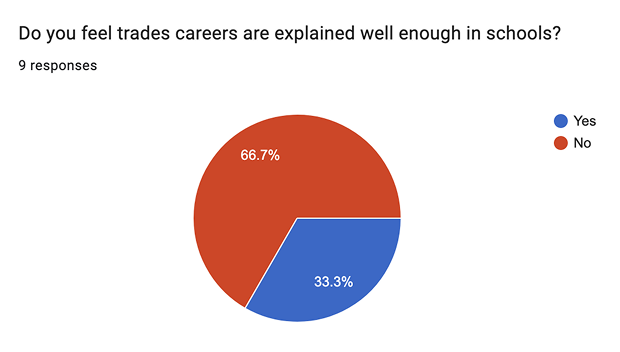
Our team also sent out a survey to local high school students to understand their concerns and motivations regarding skilled trades. We had 9 respondents in total.
Problem
- Most students don't consider skilled trades a viable career path
- Many students learn about skilled trades too late
- Students don't know a lot or have misconceptions about skilled trades
- High schools don't educate students enough about skilled trades
- Many students feel overwhelmed about the overabundance of information
Opportunity
From our research findings, we can confirm that there is a clear opportunity to educate high school students about skilled trades.
Helping teens understand the possibilities and opportunities in skilled trades would benefit both them and the skilled trades industry as a whole.
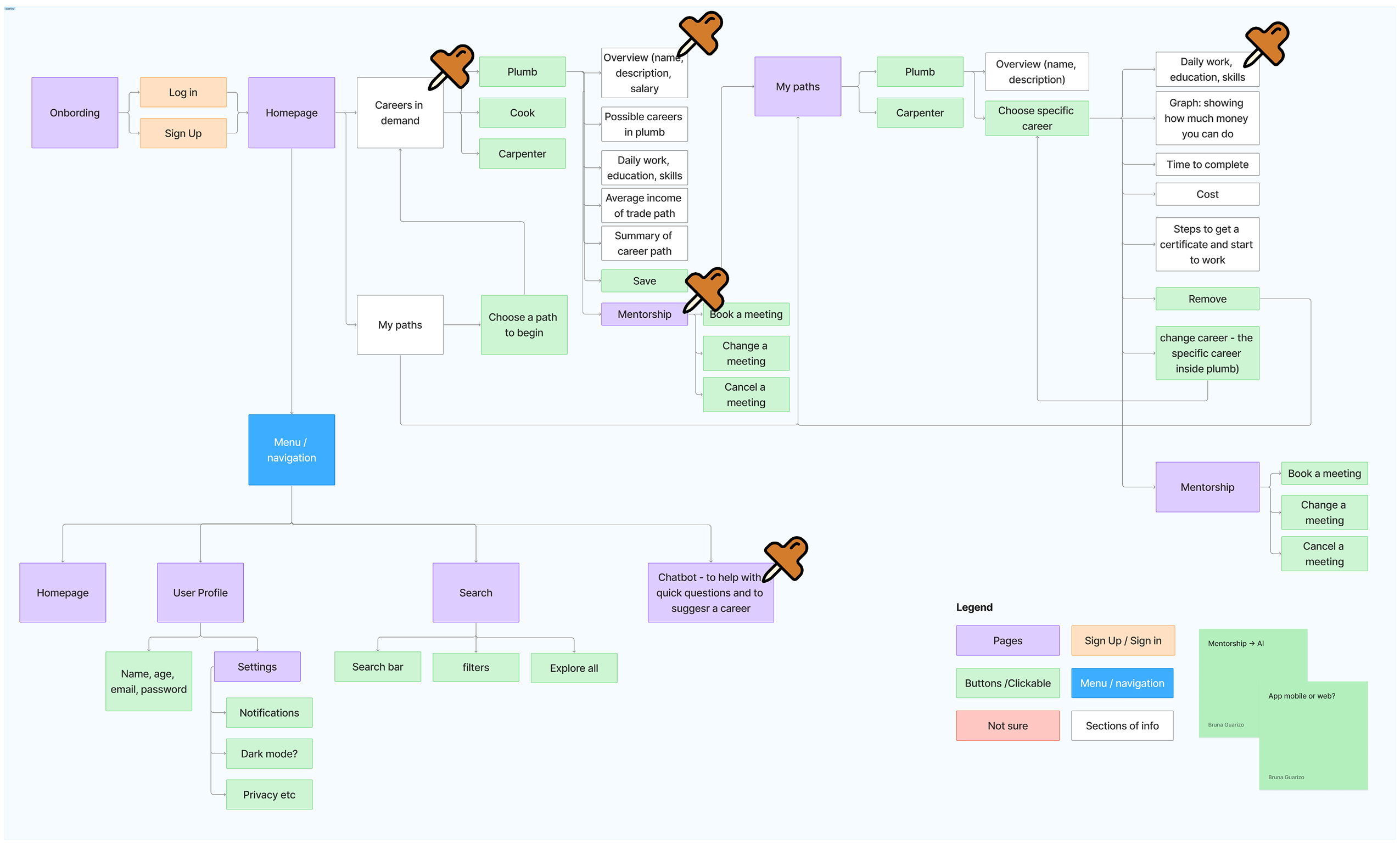
User Flow
Wireframe
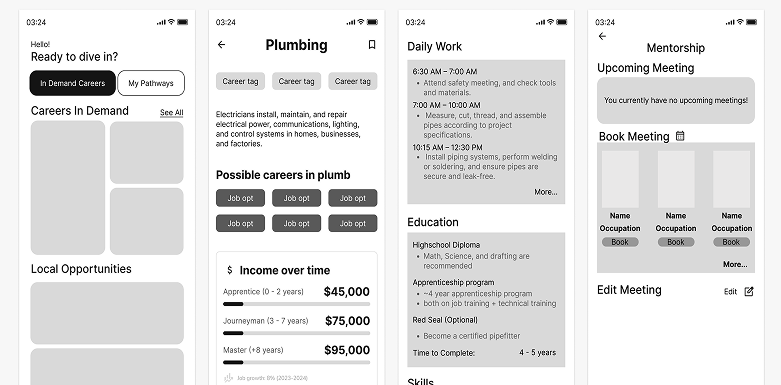
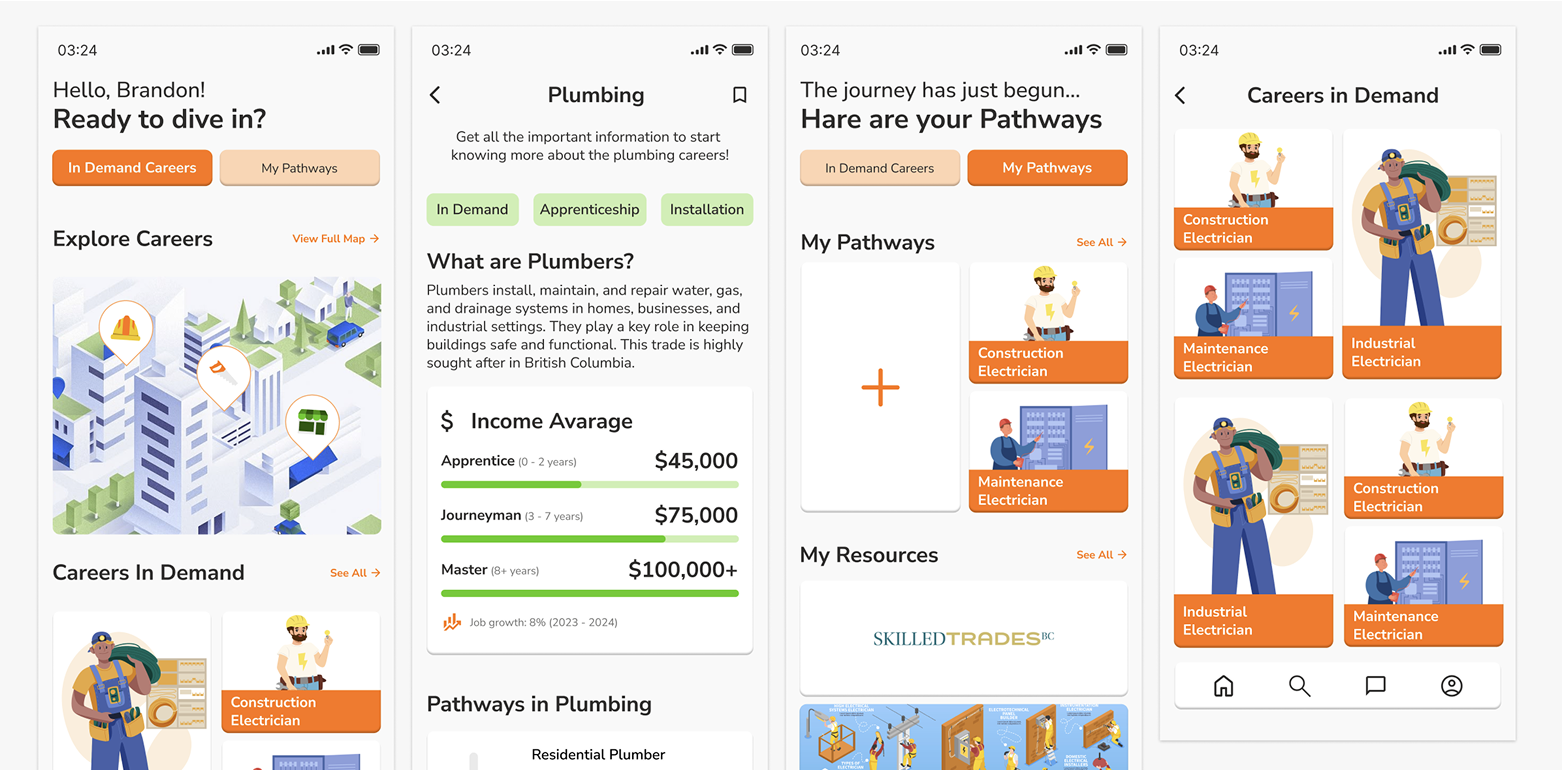
Initial focus was on:
- Learning about careers in demand
- Finding local opportunities
- Talking to mentors
- Digestable information
Rapid Iteration
Our core goal remained the same: helping students understand skilled trades careers and opportunities.
Branding & Styling
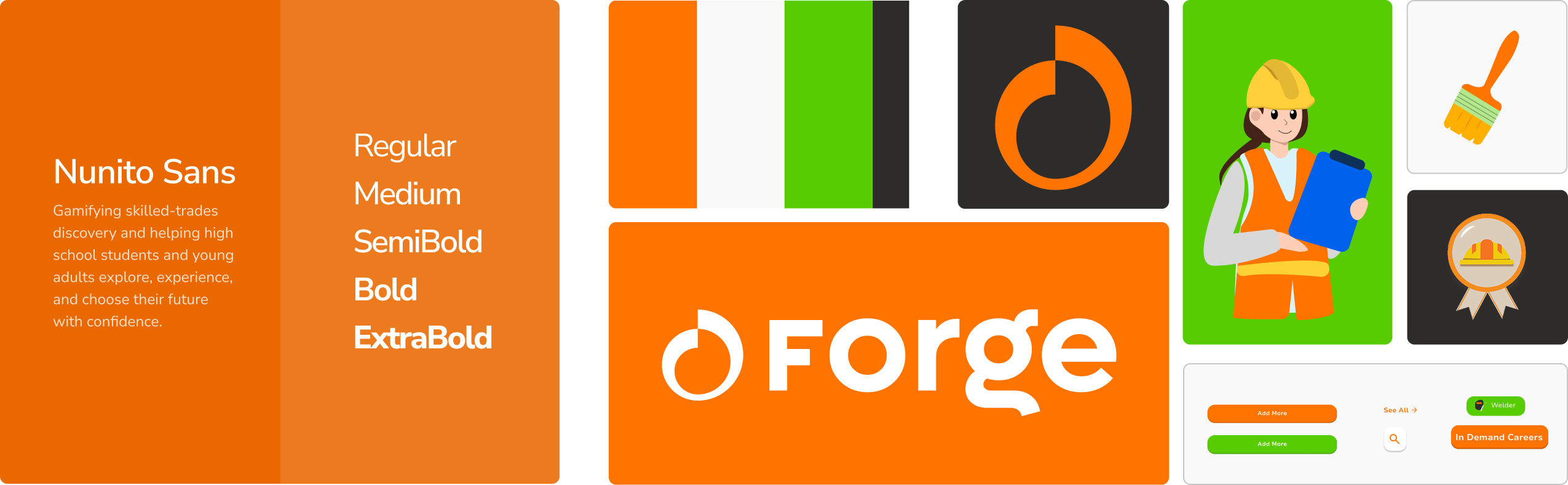
Color: The main color is orange, drawing a comparison to high-visibility vests and linking bright colors to improved mood and productivity.
Graphics: The design philosophy for graphics is simple, cartoon-style to appeal to a younger audience.
Typography: The typeface we decided on is Nunito Sans. It strikes the perfect balance between readability and playfulness.
Feedback
The feedback we recieved is that while our app provided clear information about skilled trades, the learning experience was too informative and not fun at all.
I immediately thought of Duolingo and how colorful and fun it seems, which made me realize our experience lacked the same sense of playfulness and motivation.
Improving Experience
The team agreed that we need to incorporate gamification into our app.
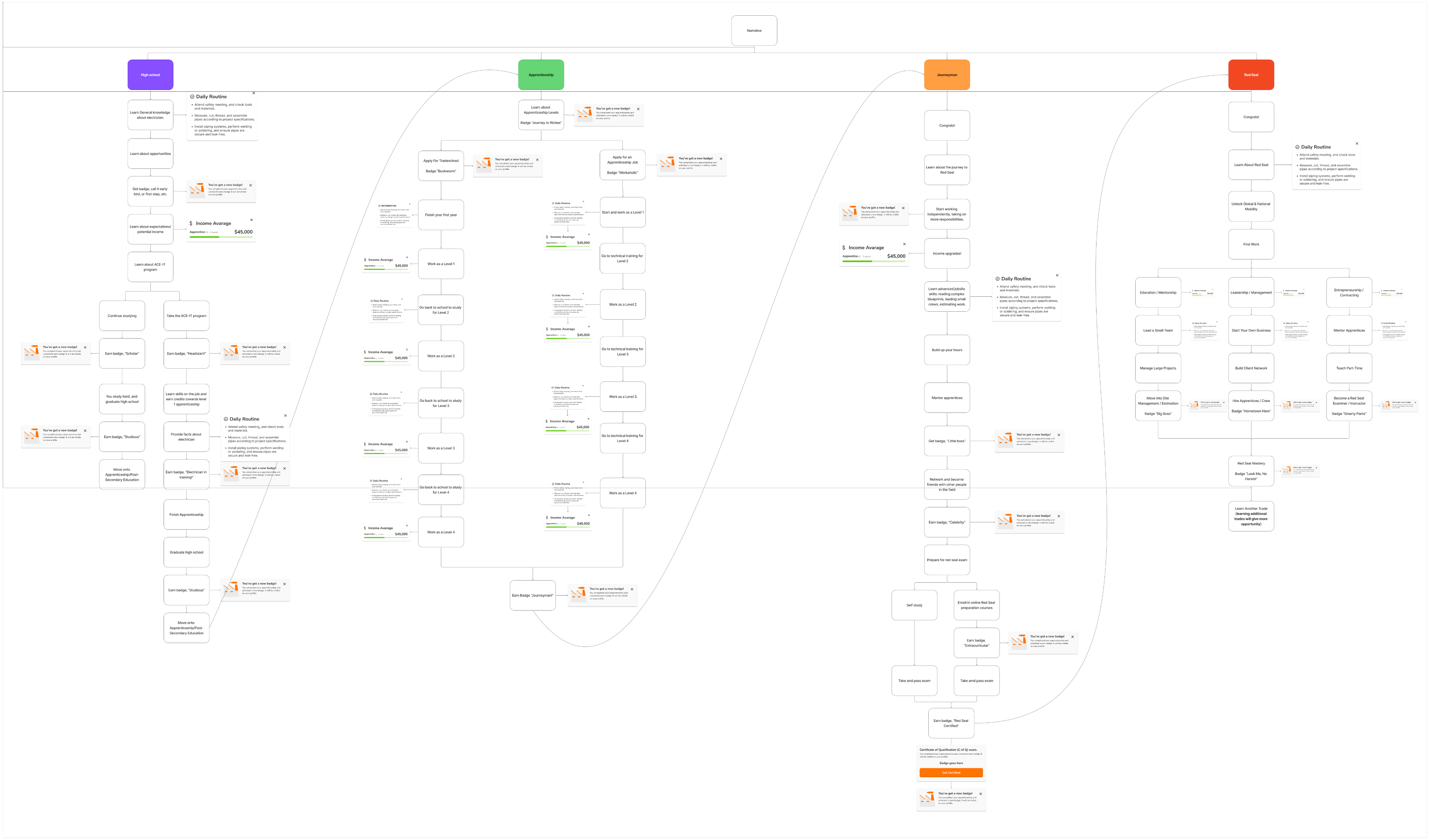
I suggested that we should make it a text-based game, leveraging AI to simulate a career from beginning to end. We could use storytelling to immerse students in the career journey from apprentice to red seal, engaging them with tasks and questions along the way.
Considering the workload required if we were to make a visual-heavy game, this felt like the best solution.
Mapping Out the Game
Redesign
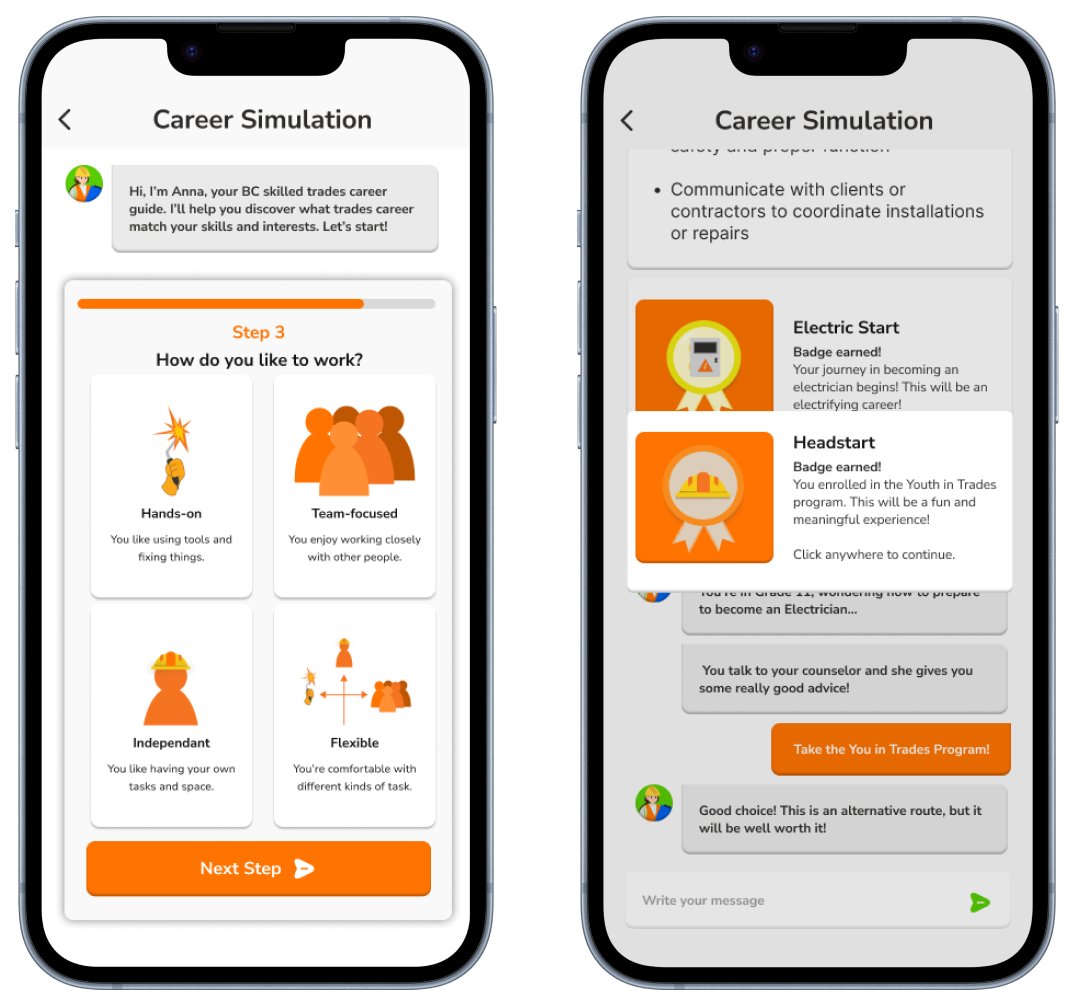
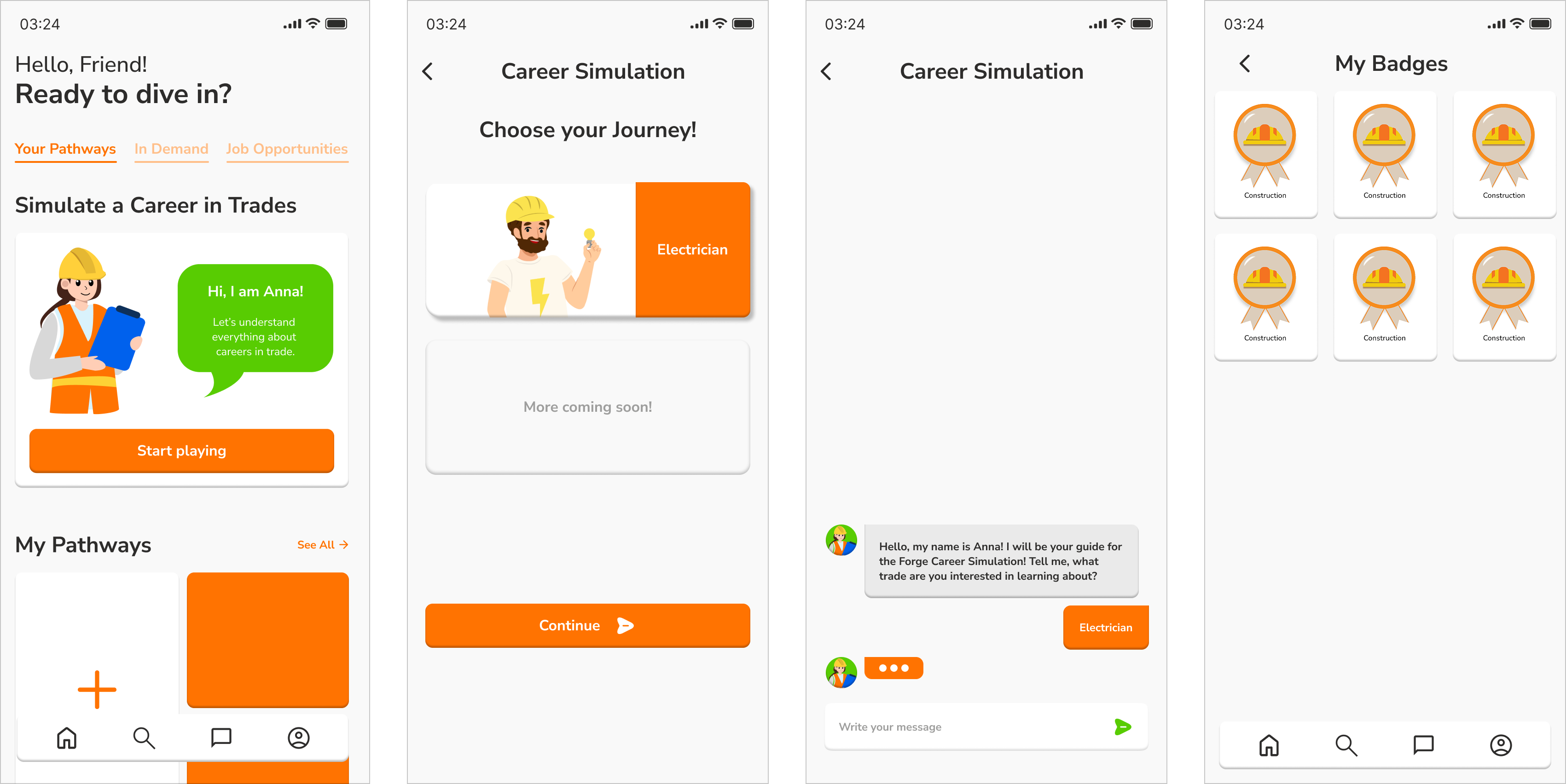
In this iteration, users can simulate a trades career from start to finish by chatting with our AI assistant, earning badges on the way as proof and reward for their hard work.
Usability Testing
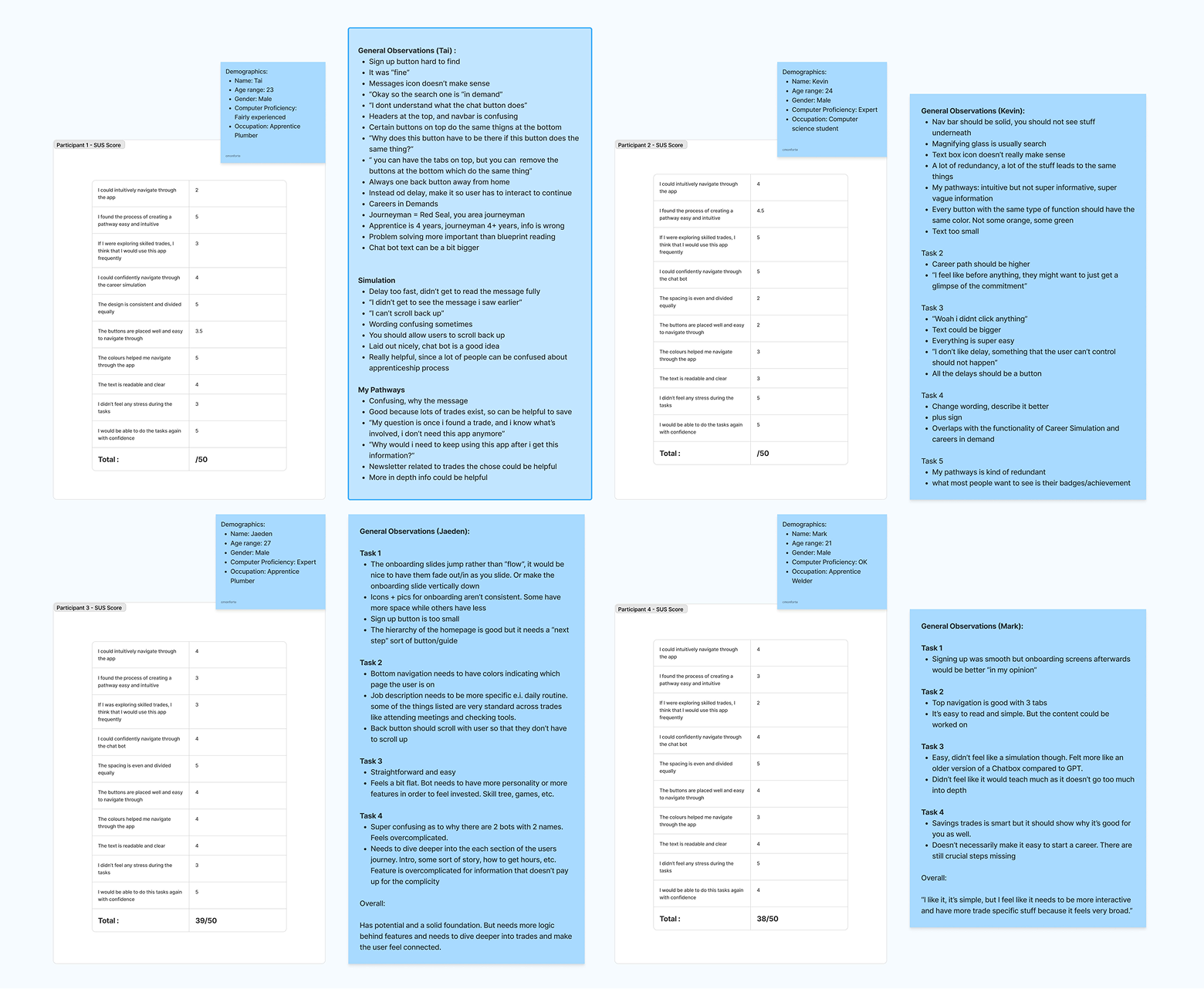
We conducted usability testing on our prototype across five tasks and received an average SUS score of 38.75 out of 50.
Feedback
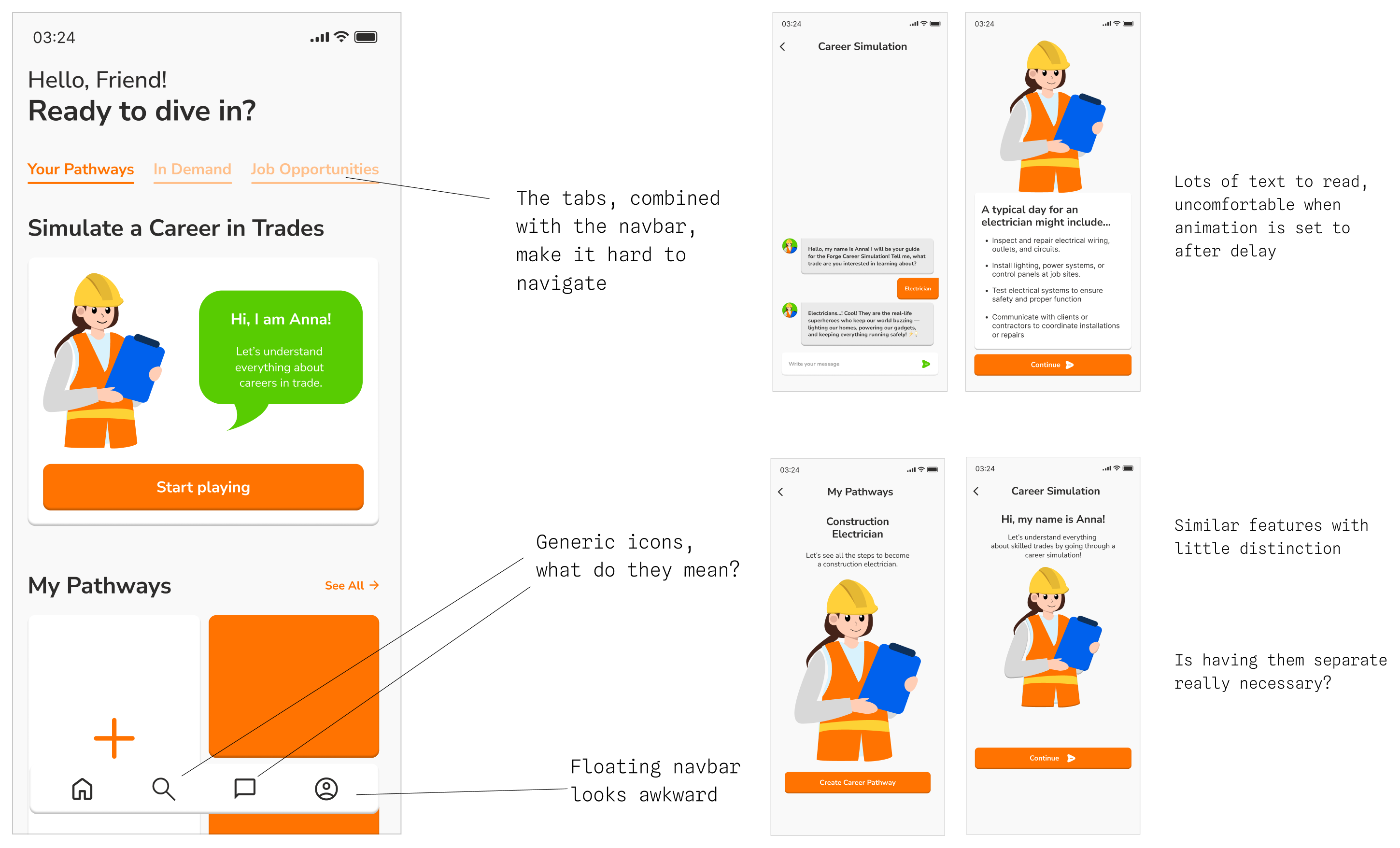
Key Findings:
- Repetitive buttons
- Unclear icons
- Lack of control in simulation
- Too text heavy
- Fun factor is lacking
User Pain Points
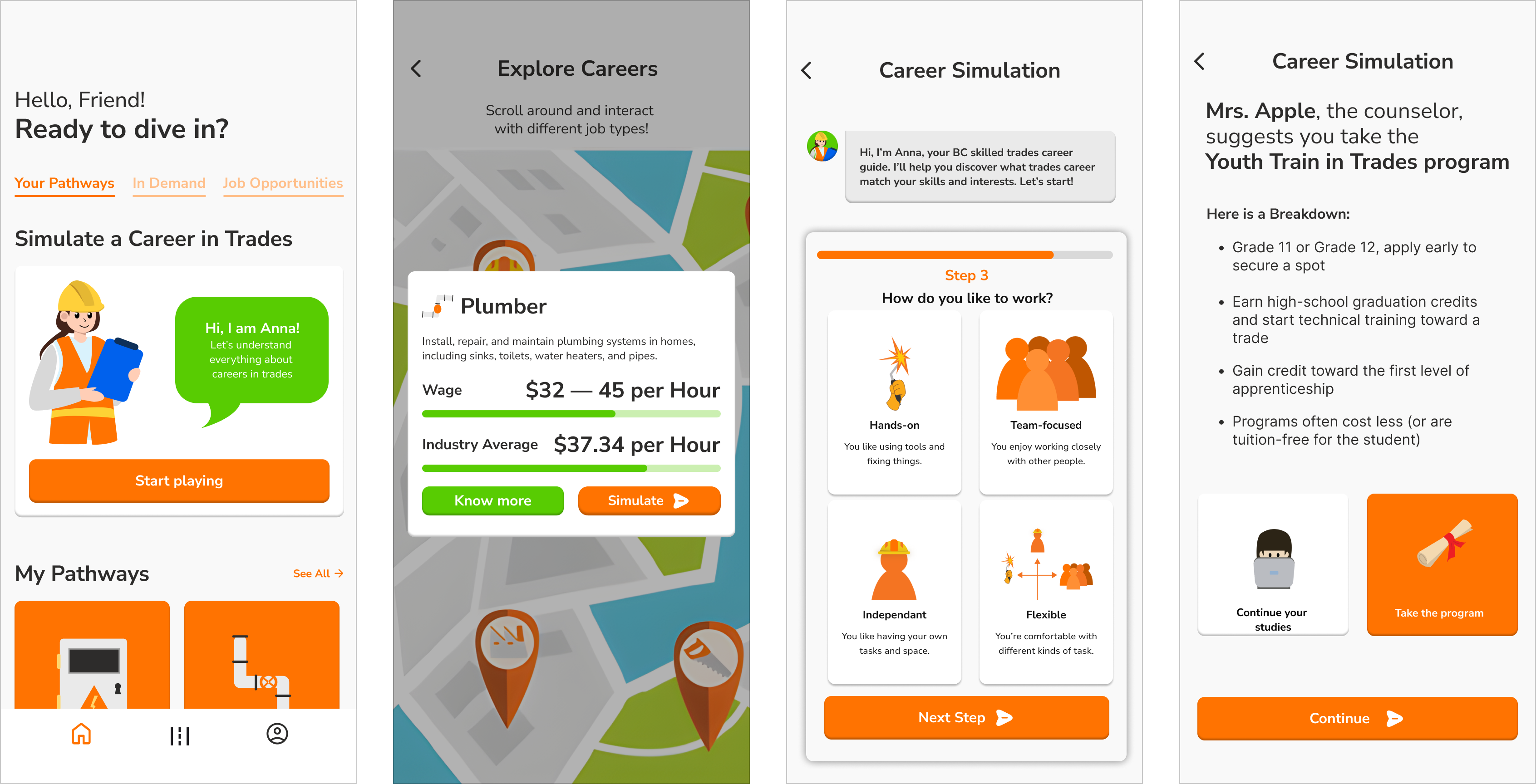
Final Design
For this iteration, the most important part was to remove the clunk and make it more fun.
- User Autonomy: I gave users control over their own pace throughout the simulation
- Onboarding: I incorporated an onboarding section for the simulation, adding interactivity and replayability
- Redundancy: Lastly, I removed the repetitiveness in the home screen and navigation bar
Retrospective
Overall, this project was super fun and honestly helped me grow a lot as a designer and developer. My main focus was research and design, but I got to touch almost every part of the app development process.
My team and I failed a lot, especially at the beginning. But I'm actually glad we did. Those failures forced us to rethink our approach and helped me learn way more than if everything had gone smoothly.
Future Iterations
If I had more time to work on it, some of the things I would include would be:
- Improving fun factor: I would introduce a wider range of simulation tasks, including time-sensitive challenges and game-inspired mechanics
- Collaboration: Partner with official organizations such as SkilledTradesBC, validating our content and providing official certificates
- Accesibility: I would introduce multilingual support to make the app more inclusive and accessible to users whose first language is not English
Gallery
Thank you, feel free to check out
my other works!